You swapped the chips for carrots, ordered the salad, quit the soda. You’re meal prepping on Sundays and even skipped dessert. You’re eating “healthy”… but your energy is low, your clothes still feel tight, and the scale barely moves. Many women over 40 wonder, “Why am I eating healthy and not losing weight?” They are making healthier choices, exercising more, and trying hard — yet still feel stuck.
Many women blame themselves when the real issue is that their body now needs a different strategy than it did at 25. Sometimes women are doing many things right, just not the things their current body needs most.
In midlife, weight loss becomes more complex because hormones, muscle mass, stress, sleep, metabolism, and recovery all begin interacting differently than they did in earlier decades. The good news? Your body is not broken, but it may need a different approach.
1. You May Be Under-Eating Protein
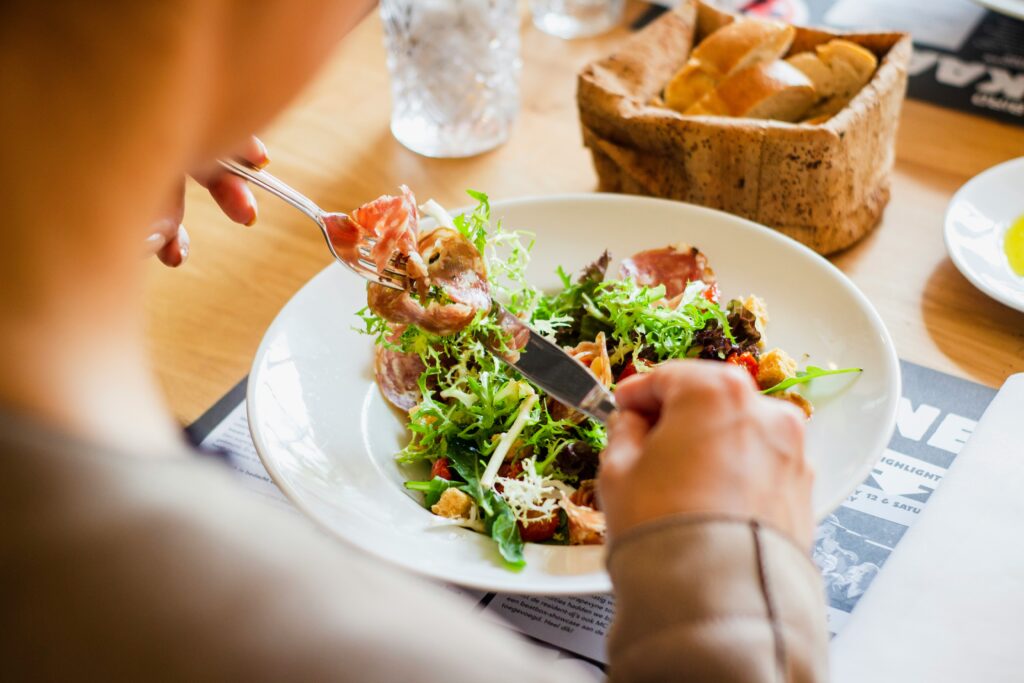
Many women who “eat healthy” are unintentionally eating very low protein. A breakfast of toast and fruit. A salad with minimal protein. Snacking throughout the day. Small portions at dinner.
This may sound healthy, but it often leaves women:
- hungry
- tired
- losing muscle
- and struggling with cravings later in the day
Protein helps:
- preserve muscle mass
- support metabolism
- improve fullness
- stabilize blood sugar
- and support healthy aging
Research suggests women lose muscle mass during and after menopause, which may contribute to changes in metabolism and body composition. (health.harvard.edu) Some studies in postmenopausal women show higher protein intake is associated with better muscle strength, lower body fat, and better lean mass preservation — especially when combined with resistance training. (pubmed.ncbi.nlm.nih.gov) A helpful starting point for many women is aiming for protein at each meal instead of only at dinner.
2. You May Be Losing Muscle — And Muscle Matters More Than You Think
This is one of the biggest missing pieces in midlife health conversations. As women age, muscle mass naturally declines if it is not challenged through resistance training and adequate nutrition. This process is called sarcopenia. Muscle matters because it:
- supports metabolism
- helps blood sugar control
- improves strength and balance
- supports bone health
- and helps women stay functional and independent as they age
Many women focus only on eating less and doing more cardio. But if the body loses muscle during weight loss, metabolism can become less efficient over time. I see this frustration constantly in women who feel like they are working incredibly hard but not seeing results anymore.
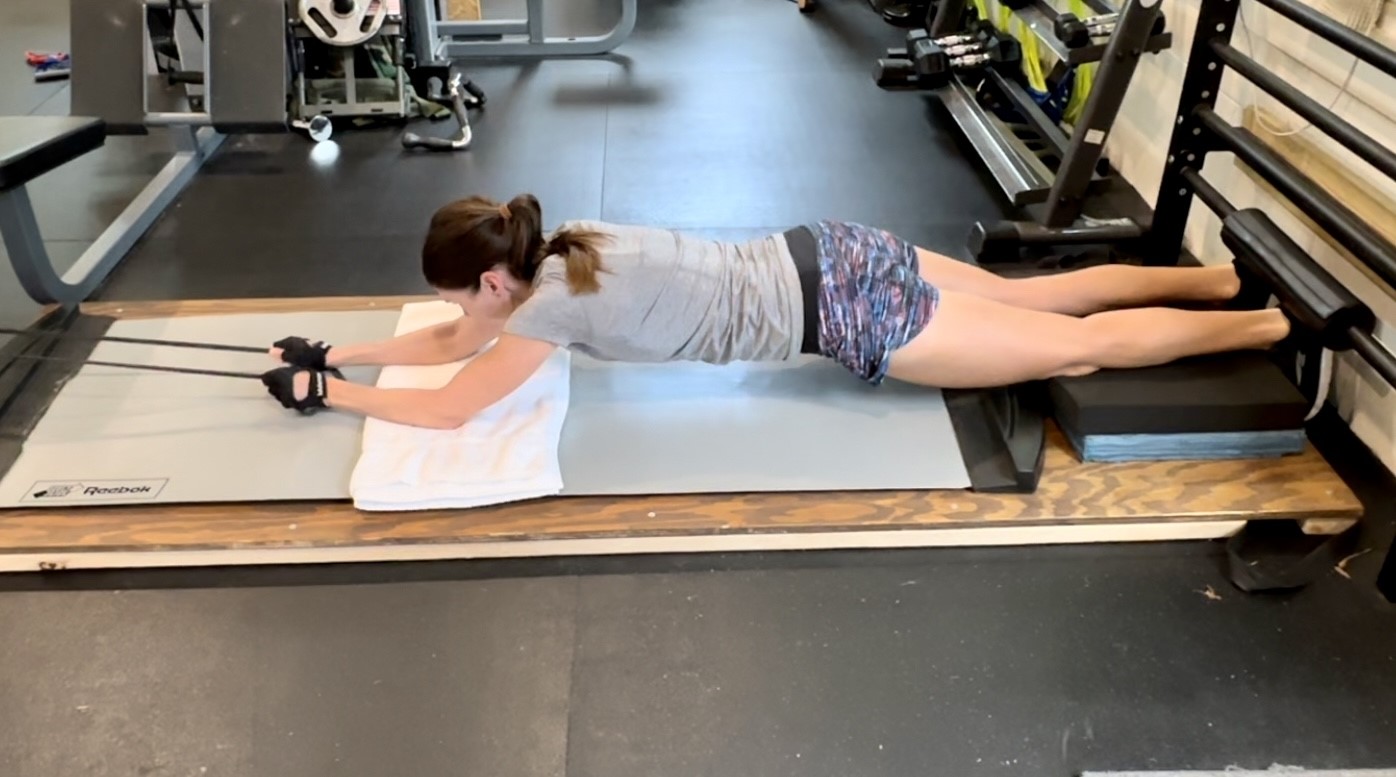
For many women in midlife, the goal should not simply be losing weight. It should be preserving and building muscle to support metabolism, strength, energy, bone health, and long-term function. Research from Harvard-affiliated sources notes that loss of muscle mass during perimenopause may play a major role in metabolic changes and weight gain. (health.harvard.edu) This is why strength training is so important — not just for appearance, but for long-term health.
3. Poor Sleep Can Affect Weight Loss More Than You Realize
If you are waking up exhausted, stressed, or frequently during the night, your body may be fighting an uphill battle. Sleep impacts:
- hunger hormones
- cravings
- blood sugar regulation
- recovery
- stress hormones
- and energy levels
Research on midlife women has found strong connections between sleep disruption, metabolism, and cardiometabolic health during the menopause transition. (pmc.ncbi.nlm.nih.gov) And unfortunately, many women experience worsening sleep during perimenopause and menopause. When people are exhausted, they often:
- move less
- crave quick energy foods
- recover poorly
- and feel too drained to stay consistent
Sleep is not laziness. It is a foundational health behavior.
4. Stress and Cortisol Matter
Chronic stress does not automatically “stop” fat loss, but stress hormones like cortisol can influence appetite, cravings, emotional eating, sleep quality, energy levels, and even fat distribution over time. Research suggests that ongoing stress and elevated cortisol levels may contribute to increased abdominal fat accumulation and changes in eating behaviors, particularly when recovery, sleep, and overall health habits are poor. (pmc.ncbi.nlm.nih.gov)
This is why wellness cannot focus on calories alone. Sometimes the healthiest next step is learning how to better regulate and recover from stress through habits such as:
- slowing down and building margin into your schedule
- walking regularly
- practicing breathing or relaxation techniques
- setting healthier boundaries
- spending time in supportive relationships and community
- and creating realistic routines instead of living in an “all-or-nothing” cycle
5. “Healthy” Foods Can Still Make Weight Loss Difficult After 40
This surprises many people. Foods can absolutely be nutritious and easy to overconsume.
Examples:
- handfuls of nuts,
- smoothies,
- granola,
- healthy snacks,
- restaurant salads,
- nut butters,
- coffee drinks,
- grazing throughout the day.
Many women also underestimate portions on weekends or evenings. This does not mean you need obsessive tracking forever. But awareness matters. Often the goal is not perfection. It is consistency.
6. You May Not Be Moving Enough Overall
Many women either exercise intensely a few times per week but sit most of the day or avoid strength training entirely. Daily movement matters more than many people realize. Walking, strength training, mobility work, and general activity throughout the day can all support:
- metabolism,
- insulin sensitivity,
- stress reduction,
- recovery,
- and long-term health.
Harvard researchers note inactivity may predict abdominal weight gain more strongly than menopause itself. (health.harvard.edu) That does not mean you need exhausting workouts. It means your body benefits from regular movement.
7. The “All-or-Nothing” Cycle May Be Keeping You Stuck
Many women are not failing because they lack motivation. They are exhausted from constantly starting over. A common cycle looks like this:
- eat perfectly Monday through Thursday,
- get overwhelmed by Friday,
- overeat on the weekend,
- feel guilty,
- then restart Monday.
This pattern often creates frustration, inconsistency, and emotional exhaustion — even when someone is trying very hard. Sustainable health usually does not come from extreme restriction. It comes from building habits you can repeat consistently:
- eating enough protein,
- walking regularly,
- strength training,
- sleeping better,
- managing stress,
- and making healthier choices more often than not.
Research consistently shows long-term consistency matters more than short bursts of perfection. Small habits repeated over time are often what create lasting results.
Why Eating Healthy Alone May Not Lead to Weight Loss After 40
If you are eating healthy and still not losing weight, please do not assume you are lazy or lacking discipline. Many women are trying incredibly hard with outdated advice that no longer fits their body or season of life. Hormonal changes during perimenopause and menopause are real. They can affect sleep, recovery, hunger, energy, and fat distribution. But hormones are rarely the entire story. Muscle mass, sleep, stress, movement, nutrition, and consistency still matter tremendously — and many of those things are within your control.
focus on:
- strength training 2-4x/week
- protein at each meal
- prioritize sleep consistency
- walk and move throughout the day
- manage stress realisticly
- consistent small steps instead of perfection
Your goal is not just a lower number on the scale. It is building a body that feels strong, energized, capable, and healthy for the long haul. If you’re tired of feeling stuck and want help building realistic habits around strength, nutrition, energy, and healthy aging, I’d love to support you.
You can learn more about coaching or schedule a free clarity call here.